
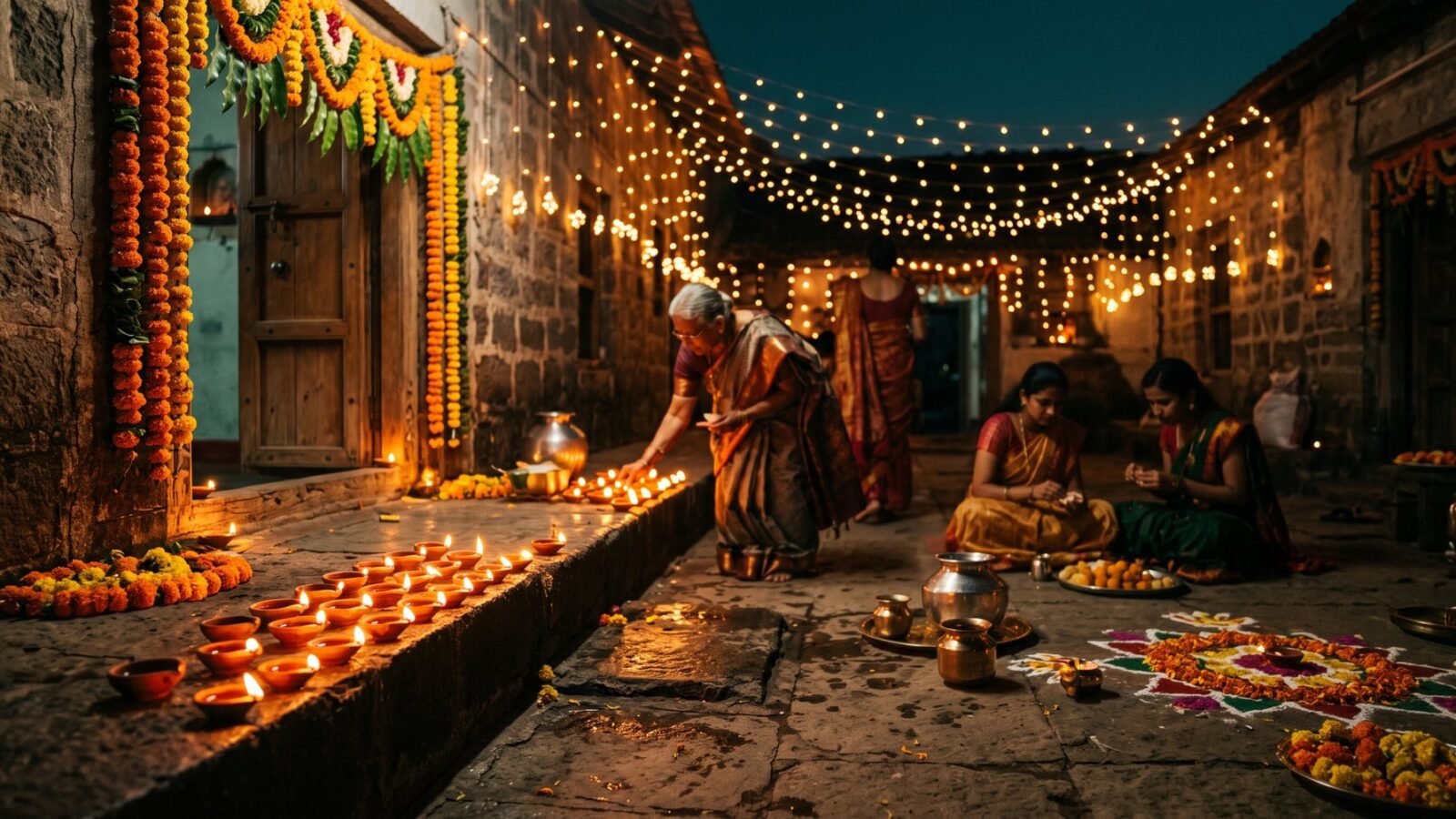
When Diwali falls, in 2026 and 2027
Diwali 2026 is on Sunday 8 November. The broader five-day festival runs roughly from Friday 6 November through Tuesday 10 November, taking in Dhanteras, Naraka Chaturdashi, Diwali itself, Govardhan Puja and Bhai Dooj. Diwali 2027 is on Friday 29 October, with the five-day period spanning roughly 27 October to 1 November.
The festival moves against the Gregorian calendar each year and the demand peak moves with it, so a booking pattern that worked last year is not the same set of calendar weeks this year. The 2026 date landing on a Sunday also stretches the peak in both directions, since families can take the weekend before or the weekend after and still be present for the main day.
If your travel is tied to a specific family event rather than to the festival generally, work backwards from that date. A wedding two days before Diwali sits inside the most expensive week of the year on these routes, and knowing that in June is worth more than any booking tactic in September.
How far ahead to book
The most commonly cited industry advice is to book Diwali period flights roughly 60 to 90 days ahead, which for a November 2026 Diwali points at early August to mid September. Some sources argue for considerably further out, four to eight months, on the reasoning that peak India-bound inventory sells down early and the cheapest fare buckets disappear long before the average traveller starts looking.
Both pieces of advice come from travel industry commentary rather than from published fare data, so treat them as shape rather than science. What holds up is narrower. The cheapest inventory on an oversubscribed date is finite and goes first, and on a date where the airline knows demand will arrive regardless, it has no reason to discount later. Around Diwali the airline is not trying to fill the aircraft. There is no sale to wait for.
You cannot book much more than a year out in any case, since airlines open schedules around eleven to twelve months ahead. Once the schedule is open the question stops being whether it is too early and becomes whether your dates are firm. An early cheap fare with strict change rules costs more than a later flexible one if a visa appointment or a school calendar or a family decision then moves. Settle the dates, then buy.
If you are already inside the window
Most people read a guide like this when the ideal booking window has already closed. That is normal, and it is workable.
Widen what you are willing to accept, in this order. Dates first: moving departure by two or three days, especially onto a midweek departure, finds materially better inventory than the weekend either side of the festival. Then routing, because a one-stop through a Gulf or European hub frequently prices below a nonstop on peak dates and the one-stop options on these routes are extensive. Then airport, since for North India, arriving into Delhi and connecting, or flying through to Amritsar, are different price points on the same trip. Then cabin and fare family, where the gap on a single flight is larger than people expect.
On peak Diwali dates the constraint is often availability rather than price. Autumn schedules on some India routes are affected by seasonal patterns and, in recent periods, by suspensions and schedule cuts, so the real question can be whether a sensible routing exists at all. This is also the point where a consolidator fare is worth a look, because the negotiated inventory an agency can reach is not the inventory a public search shows. It will not undo a sold-out date. It is a different set of options.
What we would not advise is waiting for a drop.
Which days around Diwali are cheaper
There is usually a cheaper way to travel the same week, and it comes from flying when other people are not.
- Diwali day itself, and the day after. People want to arrive before the festival, not during it. Departures that land on or just after the main day are softer than the weekend before.
- Midweek departures. Tuesday to Thursday beats Friday and Saturday. That is a broad airline pricing pattern rather than anything specific to India routes, but it holds up on peak dates.
- An asymmetric trip. Out before Diwali and back in early December is a different price from two weeks sitting inside the peak at both ends.
- Awkward arrival times. A 2am arrival into Delhi is unpleasant and it is frequently cheaper.
Saving money by arriving during the festival only works if being late is acceptable to the people expecting you. For a wedding it usually is not.
Canada follows the same shape
The Diwali pattern from Toronto, Vancouver, Montreal and Calgary looks much like the pattern from US cities, because it is driven by the same festival and the same diaspora demand rather than by anything national. Book early, expect no late discount, use midweek and post-festival departures as the lever.
Two Canadian specifics are worth knowing. Some Canada to India nonstops run seasonally rather than year round, and their operating seasons do not necessarily line up with the Diwali window, so the routing available in early November may not be the one you flew in January. The one-stop options through Gulf and European hubs stay available regardless, which is usually where a Canadian Diwali booking actually lands. From Montreal or Calgary in particular, ask what is actually operating on your dates rather than assuming last winter’s schedule.
Fix the dates when the family event is fixed, then book, then stop watching the price. Watching a peak fare after purchase reliably makes a correct decision feel worse.